The science of memorable: Why the best events are designed. - asembl.group
asembl.group – live, digital & hybrid events_4

The events people remember are rarely remembered evenly. 


People remember the moment the room shifted. The conversation they did not expect to be having. The detail that made the day feel worth their time. They also remember the ending.  Now think of the last conference you attended, but struggled to describe a week later.

That matters for event organisers.  Memorability is not only a creative ambition. It affects engagement, advocacy, future attendance and commercial value.

The difference between those two experiences is rarely budget or production value. More often, it’s down to whether the event was deliberately designed to be remembered, or whether event memorability was achieved as a fortunate ‘accident’.

Four levers shape whether an event is remembered:

  1. In-room experience
  2. Narrative
  3. Digital priming
  4. Environment

Designed together, they give delegates a clearer reason to arrive, engage, recall and return.

Drawing on expertise from across asembl.group partners, we explore the science behind memory and how it can be used to design events with impact that last beyond the day itself.

The science of memorable_what do you want them to feel

Memorability is a science, not a feeling.


Daniel Kahneman’s peak-end rule is a useful, and potentially uncomfortable, reminder for event planners: delegates rarely remember an event as the average of the whole experience.  They tend to store the strongest emotional moment, whether positive or negative; and the way the experience ended.  Everything in the middle has less influence on what people retain.

For event planners, this is either unsettling or liberating, depending on how you use it. The truth is you do not need every element to be extraordinary.  But you do need to know which moments matter most, how they should make people feel (and why), and prioritise them to reflect this.

Sensory cues work in the same way.  Scent, sound, light, texture and temperature can all anchor memory. Used well, one unexpected sensory detail can be more effective than a room overloaded with stimulation on arrival.  The brain links emotional experiences to the sensory environment around them, giving attendees stronger triggers to recall the event long after it’s ended.

Zoe Light, Head of Events at asembl., describes the design challenge in three simple terms: “What do you want people to see, think and feel? We always try to focus on those three, and feeling is particularly powerful nowadays. People often remember how they felt in a moment, maybe more than what they did.”

Engineering the moments that stick.


Experience design cannot assume one type of attendee. People learn differently, process stimulation differently and arrive with different reasons for being in the room. That makes neurodiversity an important commercial consideration, not just an add-on.

Zoe is direct about where the industry is heading: “You can’t put an event on with just one type of person in mind. You should start from the baseline that everyone is neurodivergent in some way, because we all learn differently, and attendees will have different motivations and goals for being there. Bespoke experiences should be designed in a way that feels considered and relatable for every person in the room.”

The physical environment or venue must carry the same thinking. Katherine West‑Dargon, Head of Venues & Partnerships at Venufindr, often sees this missing at the venue selection stage: “A venue with poor wayfinding, overwhelming acoustics or an inflexible layout can undo careful programme design before the first session even starts. Quiet spaces, natural light, intuitive flow and other such considerations aren’t premium add-ons, they’re the conditions that allow the programme to make its intended mark.”

Events that consider cognitive accessibility from the brief stage, across both programme and venue, achieve stronger engagement, dwell time and recall. Venufindr works with clients from the outset to understand how the space needs to support that.

The narrative arc: memory before and after event day.


One of the most useful tools in event design is time. Memory is not shaped only on the day. It is shaped before people arrive and reinforced after they leave. The opportunity to shape what an event means does not, and should not, end with the closing keynote.

Pre-event narrative primes this whole process. When delegates understand clearly why they are attending, what they can take from the day and why it matters to them, they arrive ready to engage.

Melissa Tyler, Group Strategy Director at Patch Marketing, puts it plainly: “When the live experience matches a delegate’s primed impression, memory encoding has greater impact because the brain isn’t busy reconciling a mismatch; it’s free to absorb and attach meaning.”

Zoe’s team takes this further, turning pre-event touchpoints into a two-way conversation rather than a broadcast. “Our pre-event delegate surveys, conducted when they save the date and later register, often give us valuable insights into what the strategy needs to be. We specifically ask attendees what they’re personally hoping to get out of the event. That makes sure both the content on stage and surrounding touch points are tailored to their individual ROI.”

Done well, people arrive with a reason to take part, rather than being passive observers. That makes the live experience work harder from the start.
Post-event content is, as Melissa notes, “the highest-value content an event organiser produces and often the most missed opportunity.” A recap reel, speaker feature or session highlight can act as a retrieval cue when shared at the right time. It brings the experience back into focus, keeps the memory active and builds the social proof that makes future attendees feel compelled to register next time.

Earned media adds another layer. Press coverage, industry roundups and speaker quotes give the event third-party credibility that owned content cannot create on its own. Owned content reminds people what happened. Earned coverage gives it weight. For future attendees, that can be the difference between an event they just recognise and one they actively make room for in their diary.

For asembl., this works best when there is one clear thread from the first save the date to the final follow-up. That thread matters more than any individual element. “That story begins from the first save the date,” says Zoe. “It runs through pre-marketing, every touchpoint on the day and the follow-up. One clear message, consistently carried through everything.”

Group_Blog images (1)

The rooms people remember.


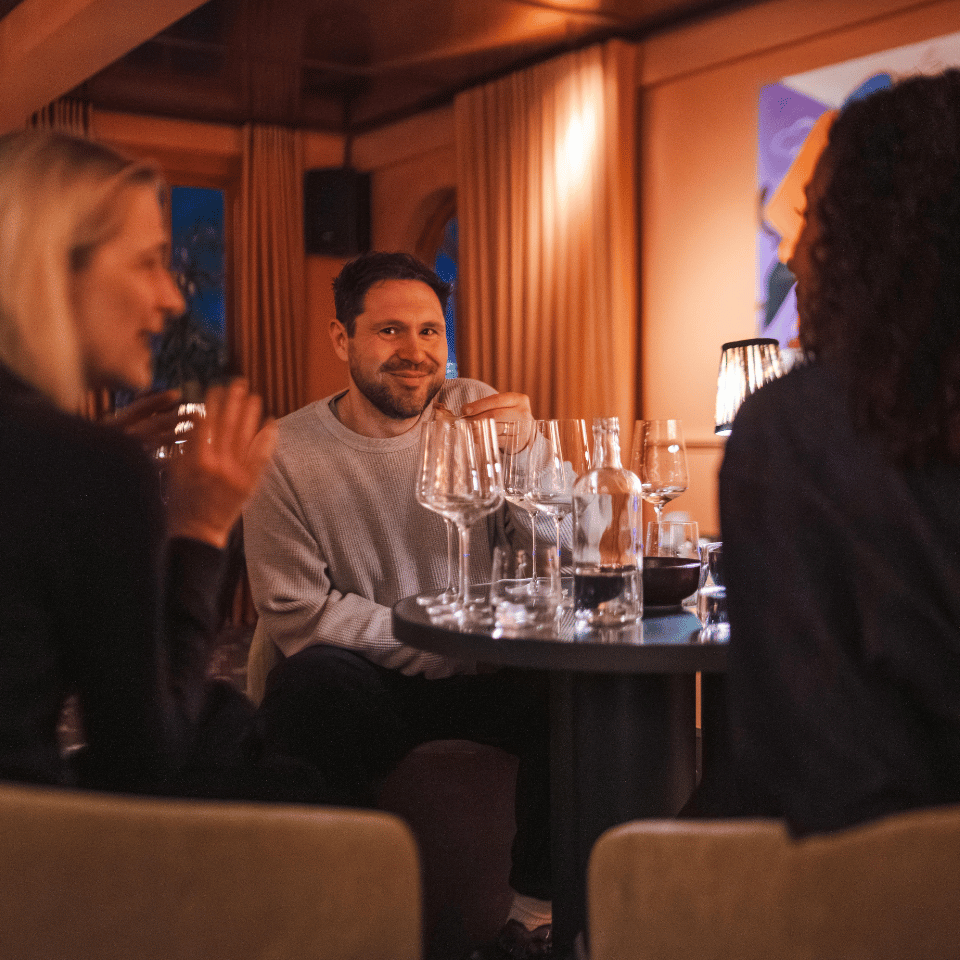
The physical environment is not a backdrop. It shapes how people feel, interact and remember the event. A venue may look right, but the real test is how well it supports the organiser’s strategic objectives.

The gap between how a venue looks and how it performs is wider than many planners account for. Katherine explains the consequence: “Too often, venues are selected on capacity, location and aesthetics, rather than how the space will make people feel, interact and remember the experience. Acoustics, lighting, spatial flow and sensory balance directly affect engagement, energy and recall.”

Social architecture matters too. Effective networking happens when the room makes useful conversations feel natural. Katherine calls these “designed collisions”: communal spaces, interactive moments and movement patterns that bring people together without forcing it.

Two recent examples prove this point.

  • A Belmond client event at Six Park Place created a natural rhythm across inside and outside spaces, so guests could engage at different energy levels throughout the day.
  • A Guerlain fragrance activation used hand massages, scent storytelling and an interactive workshop to create a clear sensory anchor.

Katherine explains. “Environment, sensory design and social flow working together so the experience felt effortless, immersive and easy to remember.”

The venues that perform best on memorability tend to offer natural light, outdoor access and flexible layouts. Katherine points to spaces such as The Newt in Somerset, Crafted by PowderMills and Six Senses London. They understand that memorable events are not built around overstimulation. They are built around environments where people feel comfortable enough to connect in a way the event organisers want them to.

Zoe applies the same thinking at programme level: designing around what people need to see, think and feel, so the environment becomes part of the experience, not a passive backdrop.

Build visibility before demand.


Memorability also starts outside the room, and earlier than most organisers think. Search, discovery and digital content shape what people think an event is before they even register.

Melissa is clear on the risk of treating digital strategy as a late pre-event push: “The organisers seeing the strongest results have moved away from relying on a last-minute campaign. When visibility is built over time, you’re already visible and prominent when decision-making starts.”

The same discipline becomes critical after the event, too. Ask an AI tool to recommend leading events in a sector, and it can only work with the material it can find: owned content, earned coverage and third-party references.  An event with a thin digital presence may not appear at all.  It may also appear in outdated terms that no longer reflect what it has become today. “AI systems aggregate historical content,” Melissa explains, “so they can lag behind an event’s current identity.”

The answer is surprisingly practical. Events need comprehensive, current owned content supported by credible third-party references. Owned content gives search and AI systems accurate material to read. Earned media, endorsements and industry coverage give those claims the trust and corroboration they need to carry weight.

Memorability works as a system.


The events that stay in people’s memory are rarely the ones that got lucky with a strong speaker or beautiful room. They are designed that way.

Memorability is built through deliberate choices:

  • the moments to engineer
  • the senses to anchor
  • the story to tell before and after the day
  • the environment that makes it all land.

It is not one tactic. It is a system. Digital priming, narrative, in-room experience and environment all need to work with the same strategic intent.

That is the thinking that connects asembl., Patch Marketing and Venufindr, and exactly where our unique group model earns its place.

asembl.group brings together independent specialists across experience, marketing, venues and more, assembled around your brief through one easy partnership.

Group scale. Specialist agility. One clear thread from the first search to the final follow-up.

If your next event needs to be remembered by the right people, for the right reasons, send us your brief.
Frequently Asked Questions.

How can organisers design an event to be remembered?

Memorability starts with knowing which moments matter most. That means designing the emotional peaks, the ending, the sensory cues, the venue flow and the story that surrounds the event before, during and after the day itself.

The strongest events are not just remembered because every element was extraordinary. They are remembered because the right elements were intentionally designed.  When programme, environment, content and follow-up all carry the same clear thread, the experience is easier to engage with, recall and act on.

What does cognitive accessibility mean in an events context?

Cognitive accessibility means reducing the mental effort required to navigate and engage with an event. In practice, that can include clear wayfinding, quiet spaces and a logical programme structure. These choices support neurodivergent attendees, yes, but they also reduce fatigue and improve interactions across the room.  This means stronger engagement, better retention and more meaningful networking outcomes for everyone.  It’s not an add on, it’s an important part of the event’s commercials.

Why does post-event content matter?

Post-event content gives people a reason to revisit the experience. For attendees, it acts as a retrieval cue, bringing key messages, moments and emotions back into focus after the event has ended. For those who were not in the room, it makes the event tangible.

It also gives the event a longer life. Recap films, speaker clips, key takeaways and earned coverage can reinforce internal messages, support future engagement and help the event keep delivering value after the room has emptied.

How should event organisers think about AI discovery and search visibility?

AI-generated recommendations depend on content that is current, structured and consistently referenced. Events with limited digital content are easier to miss or misrepresent. Testing how you currently appear is a useful starting point.  Then strengthen owned content and third-party coverage around the message you want to be known for.

Contributors.

Zoe Light 1

Zoe Light Head of Events - asembl.

Katherine West-Dargon Head of Venues & Partnerships - Venufindr

Melissa Tyler

Melissa Tyler Group Strategy Director - Patch Marketing